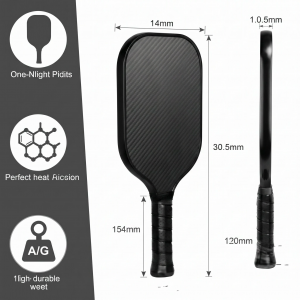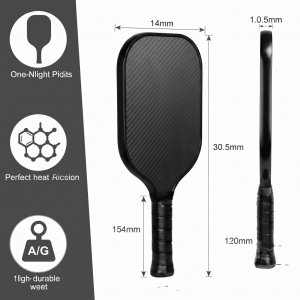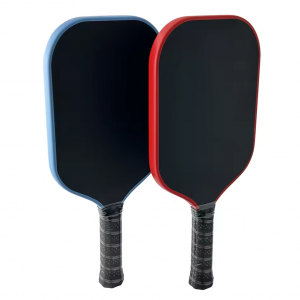



Q1: Carbon fiber sounds high-end, but is the cost prohibitively high? What is its real value compared to
traditional metals?
A1: Your concerns are very valid. While the initial cost of carbon fiber is indeed higher than that of ordinary
metals, its value should be measured by its "life-cycle cost." It not only brings lightweighting
(60%-70% weight reduction), thereby reducing equipment energy consumption and improving speed and
precision, but also possesses superior fatigue resistance and corrosion resistance, significantly reducing
maintenance, downtime, and even replacement costs. In many cases, customers have recouped their investment
within 1-2 years through improved efficiency. We excel at providing you with detailed value analysis (VAVE),
using data to demonstrate its long-term returns.
Q2: What are the specific data regarding carbon fiber's "lightweight and strong" properties? Can it meet the
stringent strength requirements of our equipment?
A2: This is precisely where our expertise lies. The specific strength (strength/density) of carbon fiber
composites is more than 5 times that of steel, and its specific modulus (stiffness/density) is more than 3 times
that of steel. But more importantly, we don't sell standard products. Each product undergoes layup design
(scientific fiber arrangement in 0°, ±45°, and 90° directions) and finite element analysis (FEA) simulation based
on your specific loads, operating conditions, and failure modes, ensuring that while reducing weight, it precisely
meets all your requirements for stiffness, strength, and impact resistance.
Q3: We have an innovative product concept but no concrete drawings. Can you provide a one-stop service from
design to manufacturing?
A3: Absolutely, and this is precisely our core advantage that distinguishes us from ordinary processing plants.
We offer "co-design and engineering" services. You only need to provide performance targets, space constraints,
and application scenarios, and our engineering team will collaborate with you to complete the entire process
from conceptual design, material selection, structural simulation, to production drawings. We are not only a
manufacturer but also your technical partner at the material application level.
Q4: How long does the production cycle for custom carbon fiber components typically take? Our project
timelines are very tight.
A4: The typical cycle for standard custom parts is 4-8 weeks, depending on the complexity of the design and
the manufacturing process. We address urgent needs through a "modular rapid prototyping" process: after
confirming the basic design, we can provide functional prototypes within two weeks for your testing and
verification, thus advancing design and production preparation in parallel and saving valuable time for your
project.
Q5: How do you ensure consistent quality for every product during mass production?
A5: Quality consistency is the cornerstone of our process control. We guarantee this through three systems:
Digital process cards: Parameters (temperature, pressure, time) for each step are locked and automatically
monitored.
Full traceability: From raw material batch number to the final product, the entire data record is traceable.
Systematic inspection: In addition to full inspection of the first and last pieces, we use non-destructive testing
methods such as ultrasonic C-scanning and 3D scanning to screen critical batches for internal defects and
dimensional accuracy, ensuring that every batch delivered to you is flawless.
Q6: How are carbon fiber components reliably connected to our existing metal structures?
A6: Connection technology is key to ensuring overall performance. We offer a variety of proven and mature
solutions:
Integrated Insert Molding: Metal connectors are directly implanted during the curing process to achieve maximum connection strength.
High-Precision Machining and Bonding: Carbon fiber components are precision machined and combined with
aerospace-grade structural adhesives and mechanical fastening to form a hybrid connection.
Professional Connection Design: Our engineers will design customized connection solutions for you and conduct
focused simulations and tests on the connection points to completely eliminate your concerns.
Q7: Besides common aerospace and sporting goods, what are some successful applications of carbon fiber in
general industrial equipment?
A7: In fact, industrial equipment is one of our fastest-growing sectors. Typical applications include:
Automation Equipment: Robotic arm links, high-speed pickup axes, lightweight and high-rigidity gantry frames,
which can improve speed and cycle time.
Testing Instruments: Optical platforms, scanning bases, whose extremely high dimensional stability ensures
measurement accuracy.
Medical and Semiconductor Equipment: Requires non-magnetic, corrosion-resistant, cleanroom-compatible
supports and moving parts.
Logistics and Transportation: Lightweight drone structural components, robot AGV bodies. We welcome your
description of the specific operating conditions of your equipment, and we can provide the most relevant case
studies for reference.
Q8: We want to try carbon fiber components, what should we do first?
A8: The best starting point is a non-binding technical consultation. You only need to provide:
Drawings or photos of the components currently in use.
The core objectives you hope to improve (e.g., weight reduction of XX%, increased stiffness, corrosion
resistance, etc.).
The approximate annual demand.
Based on this information, we will conduct a preliminary "feasibility analysis and value assessment" for you
and plan the subsequent steps. Please feel free to contact us to begin your lightweight innovation journey.
We focus on supplying industrial composite materials
with stable quality and export experience.